
Pipit
Pihoihoi (Pipit)The New Zealand pipit is a small brown-and-white songbird that resembles a lark, but has longer legs, and walks rather than hops. They are birds of open country, including the tideline of sandy beaches, rough pasture, river beds and above the tree-line. Pipits are members of the wagtail family, and frequently flick their long tails as they walk. In flight their tails have narrow white sides – a character shared with skylarks, chaffinches, yellowhammers and cirl buntings. The New Zealand Pipit is occasionally seen on Tiritiri Matangi Island. Find Out More

Morepork
Ruru (Morepork)The morepork is a small, dark, forest-dwelling owl. Found in both native and plantation forests, its distinctive “more-pork” call is commonly heard at night in many urban parks and well-vegetated suburbs. Moreporks are relatively common throughout much of New Zealand but are sparse through the eastern and central South Island. Their diet consists of insects, small mammals and birds, which it hunts at night. Find Out More
Kingfisher
Kōtare (Sacred Kingfisher)The sacred kingfisher is one of the best known birds in New Zealand due to the iconic photographs published over many years by Geoff Moon. These early images showed in detail the prey, the foraging skills and the development of chicks in the nest and as fledgings. Equally recognisable is the hunched silhouette waiting patiently on a powerline or other elevated perch over an estuary or mudflat which converts in a flash to a streak of green diving steeply to catch a prey item. The Tiritiri Matangi kingfishers are often observed feeding on skinks. Find Out More
Shining Cuckoos
Pīpīwharauroa (Shining Cuckoo)The shining cuckoo (shining bronze-cuckoo in Australia) is a summer migrant to New Zealand. It is common throughout New Zealand but it is small and cryptically-coloured and so is more often heard than seen. It has a distinctive whistling call. Two intriguing aspects of its life history are its brood-parasitic habits and the long annual trans-oceanic migration. The New Zealand subspecies breeds only in New Zealand (including Chatham Islands) but other subspecies breed in southern Australia, Vanuatu, New Caledonia and on Rennell and Bellona Islands (Solomon Islands). Shining cuckoos are heard, and often seen, on Tiritiri Matangi every year, though it is not clear whether they breed on the Island or simply pass through. Breeding is possible, as there are resident grey warblers, though these are not as common on the Island as many other birds. Find Out More
Swamp Harrier
Kahu (Swamp Harrier)The swamp harrier is a large, tawny-brown bird of prey that occurs throughout New Zealand. It is an opportunistic hunter that searches for food by slowly quartering the ground with its large wings held in a distinctive shallow V-shape. Adapted to hunt in open habitats, its numbers have benefitted from widespread forest clearance and the development of agriculture. Although carrion is a major component of the harrier’s diet, it also actively hunts live prey such as small birds, mammals and insects. Capable dispersers, birds from New Zealand visit islands as far north as the Kermadec Islands and as far south as Campbell Island. Known for their dramatic ‘sky-dancing’ courtship display the swamp harrier is the largest of the 16 species of harriers found worldwide. It is not unusual to see harriers soaring over Tiritiri Matangi in search of prey. They have large territorial ranges and frequently visit from the mainland. They have been known to take brown teal/pateke and kokako. Harriers only take prey that is on the ground, on a pond or in a tree, so a bird’s best way of escaping a harrier’s talons is to take flight. Flocks of birds have been observed mobbing harriers as they hunt and occasionally are successful in chasing them out of an area. Find Out More
Bellbird
Korimako (Bellbird)Bellbirds are the most widespread and familiar honeyeater in the South Island, and are also common over much of the North Island. Their song is a welcome sound in mainland forests that otherwise may have little native bird song. Although they have a brush-like tongue which is used to reach deeply into flowers to reach nectar, bellbirds also feed on fruits and insects. In feeding on nectar they play an important ecological role in pollinating the flowers of many native trees and shrubs. Subsequently, when feeding on the fruits that result from this pollination they have a role in dispersing the seeds, and so they assist in the regeneration of the forest in at least two ways. Bellbirds have always existed on Tiritiri Matangi and the population continues to grow every year. They have flown across to the Whangaparaoa Peninsula from Tiritiri Matangi and have been observed to be breeding in Manly and in Shakespear Regional Park Find Out More
Little Spotted Kiwi
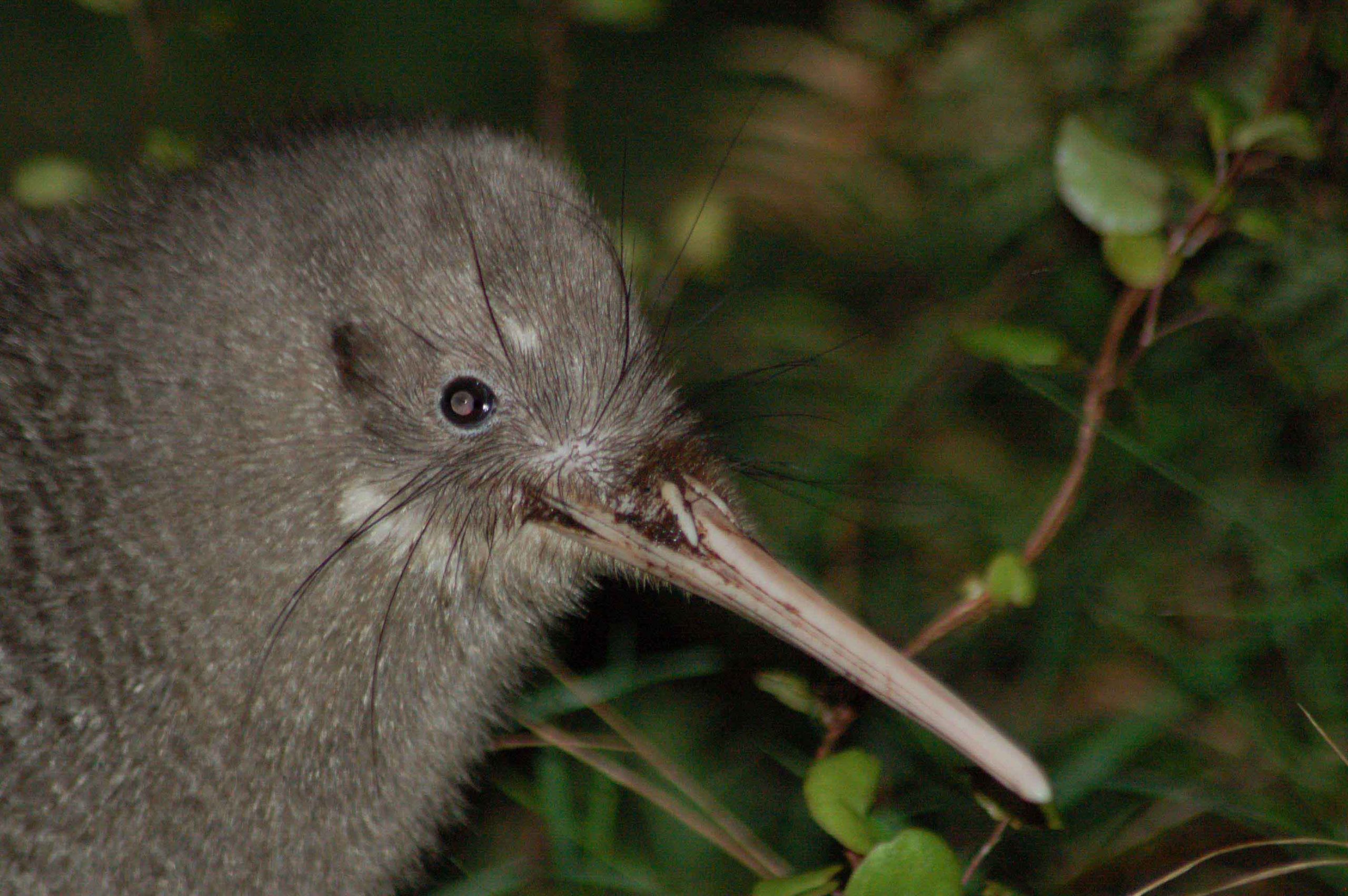 Kiwi Pukupuku (Little Spotted Kiwi)The smallest of the five kiwi species. Formerly widespread on both main islands, but now confined to offshore islands and one mainland sanctuary. Flightless, with tiny vestigial wings and no tail. Nocturnal, therefore more often heard than seen. Male gives a repeated high-pitched ascending whistle, female gives a slower and lower pitched warbling whistle. Light brownish grey finely mottled or banded horizontally with white, long pale bill, short pale legs, toes and claws.
Day visitors to Tiritiri Matangi are likely to see all but one of the translocated species of bird present on the Island. The one they almost certainly won’t see is the little spotted kiwi because, like all Kiwi, they are nocturnal. For those fortunate enough to spend the night on the Island, a night walk can be a most rewarding experience. As the Kiwi population grows and the birds become increasingly tolerant…
Kiwi Pukupuku (Little Spotted Kiwi)The smallest of the five kiwi species. Formerly widespread on both main islands, but now confined to offshore islands and one mainland sanctuary. Flightless, with tiny vestigial wings and no tail. Nocturnal, therefore more often heard than seen. Male gives a repeated high-pitched ascending whistle, female gives a slower and lower pitched warbling whistle. Light brownish grey finely mottled or banded horizontally with white, long pale bill, short pale legs, toes and claws.
Day visitors to Tiritiri Matangi are likely to see all but one of the translocated species of bird present on the Island. The one they almost certainly won’t see is the little spotted kiwi because, like all Kiwi, they are nocturnal. For those fortunate enough to spend the night on the Island, a night walk can be a most rewarding experience. As the Kiwi population grows and the birds become increasingly tolerant…