
Pōpokatea
PōpokateaDespite their size, these birds have a good set of lungs on them and can be found in noisy flocks flitting through the canopy. In the North Island the pōpokatea/ whitehead is the main host to the koekoeā/long-tailed cuckoo who lays its eggs in their nest. Once hatched, the young koekoeā then evicts the host’s eggs and chicks and is raised alone. The pōpokatea continues to feed the koekoeā as if it was their own, even though it is much larger than themselves! Find Out More

Miromiro
MiromiroOver a dozen birds have been translocated onto Tiri – though only one has decided to hightail it back home – the miromiro or tomtit. After their translocation to the island in 2004, it appeared that they had disappeared. Soon afterwards, these midget birds were found to have winged it all the way to the Hunua ranges – 60 kilometres away. Things have changed now though, and there are regular sightings of a resident miromiro or two. Find Out More
Mātātā
Mātātā (Fernbird)More like a mouse than a bird, visitors are more likely to hear the ‘call and response’ tick/tack between pairs than see a mātātā/fernbird. These small sparrow-like birds are fitted with a long tail measuring half their size which means they typically only fly short distances. The Tiritiri population were originally rescued from the path of the Northern Motorway. Using recordings of their call, conservationists managed to lure a small population from this threatened piece of land and helicoptered them to their new island home. Those 13 birds have now formed a robust population. Find Out More
Korimako
KorimakoIf you’ve ever experienced the amazing dawn chorus, you’ll know how the korimako or bellbird got its English name! The early naturalist Joseph Banks who circumnavigated Aotearoa with Captain Cook was awoken to their song and scribbled this description in his journal. “They… made, perhaps, the most melodious wild music I have ever heard almost imitating small bells but with the most tunable silver imaginable…”. A small population of these songbirds survived in the unfarmed valleys of the island, though thanks to planting efforts in the late 1980s and the installation of the sugar-water feeders their numbers have greatly increased. Thanks to these efforts, korimako are now breeding across the strait in Manly and Shakespear Regional Park! Day visitors to Tiritiri Matangi are likely to see all but one of the translocated species of bird present on the Island. The one they almost certainly won’t see is the little spotted kiwi because, like all Kiwi, they are nocturnal. For those fortunate enough to spend the night on the Island, a night walk can be a most rewarding experience. As the Kiwi population grows and the birds become increasingly tolerant of human presence, the chance of an encounter has gone from being a possibility to a probability. Five pairs of little spotted kiwi were released on Tiri in 1993, followed by six more birds two years later. A 1997 census showed the birds were…
Bellbird
Korimako (Bellbird)Bellbirds are the most widespread and familiar honeyeater in the South Island, and are also common over much of the North Island. Their song is a welcome sound in mainland forests that otherwise may have little native bird song. Although they have a brush-like tongue which is used to reach deeply into flowers to reach nectar, bellbirds also feed on fruits and insects. In feeding on nectar they play an important ecological role in pollinating the flowers of many native trees and shrubs. Subsequently, when feeding on the fruits that result from this pollination they have a role in dispersing the seeds, and so they assist in the regeneration of the forest in at least two ways. Bellbirds have always existed on Tiritiri Matangi and the population continues to grow every year. They have flown across to the Whangaparaoa Peninsula from Tiritiri Matangi and have been observed to be breeding in Manly and in Shakespear Regional Park Find Out More
Little Spotted Kiwi
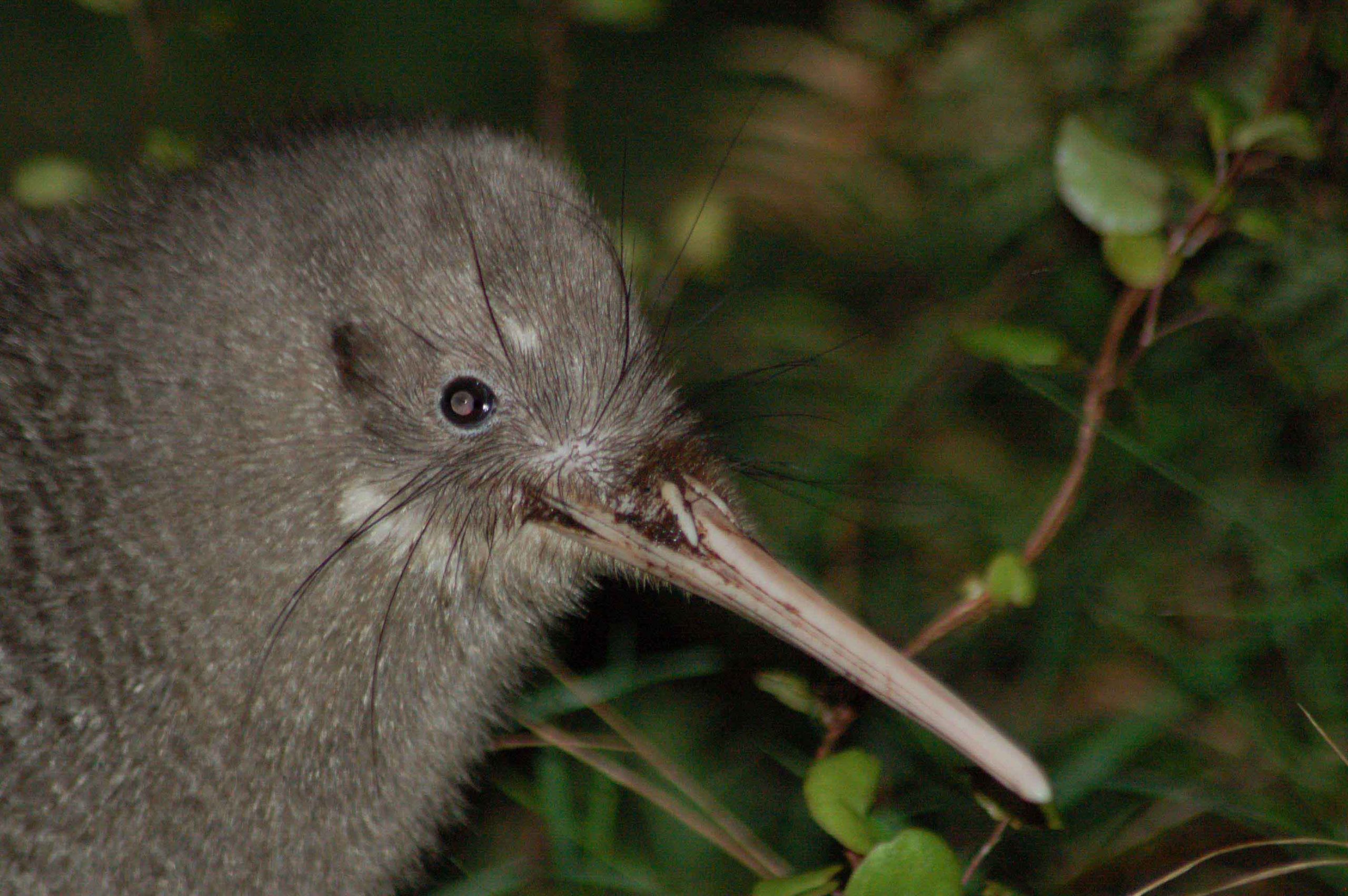 Kiwi Pukupuku (Little Spotted Kiwi)The smallest of the five kiwi species. Formerly widespread on both main islands, but now confined to offshore islands and one mainland sanctuary. Flightless, with tiny vestigial wings and no tail. Nocturnal, therefore more often heard than seen. Male gives a repeated high-pitched ascending whistle, female gives a slower and lower pitched warbling whistle. Light brownish grey finely mottled or banded horizontally with white, long pale bill, short pale legs, toes and claws.
Day visitors to Tiritiri Matangi are likely to see all but one of the translocated species of bird present on the Island. The one they almost certainly won’t see is the little spotted kiwi because, like all Kiwi, they are nocturnal. For those fortunate enough to spend the night on the Island, a night walk can be a most rewarding experience. As the Kiwi population grows and the birds become increasingly tolerant…
Kiwi Pukupuku (Little Spotted Kiwi)The smallest of the five kiwi species. Formerly widespread on both main islands, but now confined to offshore islands and one mainland sanctuary. Flightless, with tiny vestigial wings and no tail. Nocturnal, therefore more often heard than seen. Male gives a repeated high-pitched ascending whistle, female gives a slower and lower pitched warbling whistle. Light brownish grey finely mottled or banded horizontally with white, long pale bill, short pale legs, toes and claws.
Day visitors to Tiritiri Matangi are likely to see all but one of the translocated species of bird present on the Island. The one they almost certainly won’t see is the little spotted kiwi because, like all Kiwi, they are nocturnal. For those fortunate enough to spend the night on the Island, a night walk can be a most rewarding experience. As the Kiwi population grows and the birds become increasingly tolerant…