
Tiritiri Matangi’s Nīkau Grove
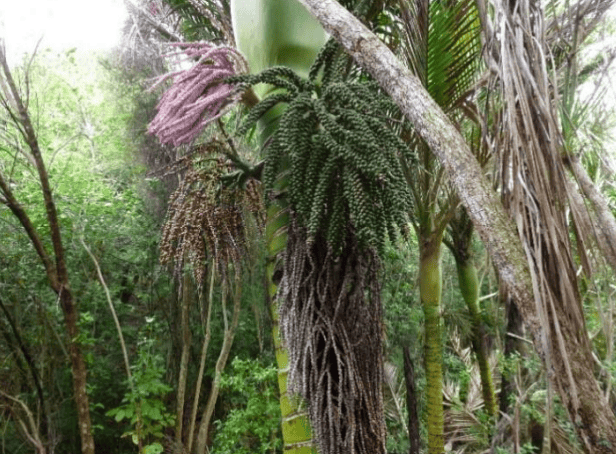
Tiritiri Matangi’s Nīkau GroveAuthor: Warren BrewerPhoto credits: Warren BrewerOne of the highlights of the Wattle Valley Walk is seeing the nīkau grove, planted during 1994. Nīkau, Rhopalostylis sapida, is regarded as the world’s southernmost palm. The large palm family, Arecaceae,is mostly found in tropical and subtropical climates. Nīkau is one of the few temperate climate outliers.
Tiritiri Matangi’s palms first flowered during 2010 and there is now a steady display of flowers and ripening fruit for visitors to enjoy. Nīkau flowers are carried on compact, much branched inflorescences. Separate male and female flowers are grouped into threes, a central female with two larger lateral males. The male flowers, with six stamens, open first. They soon disappear and female flowers open
Pollination is mostly done by small insects. A few small birds (hihi on Tiritiri Matangi) also seek the nectar amongst the sprays, collecting pollen on their feathers. New fruit which forms is green at first then ripens to a bright red to orange-red. Each fruit contains one seed. Kererū and kōkako are keen harvesters. Nīkau leaves were used by Māori for thatch, mats, baskets and wrapping food. Immature inflorescences and the young growing tip are edible when cooked.
The species name sapida means savoury, pleasant to taste. Rhopalostylis means club shaped style.

Karo - a frontline species for coastal protection
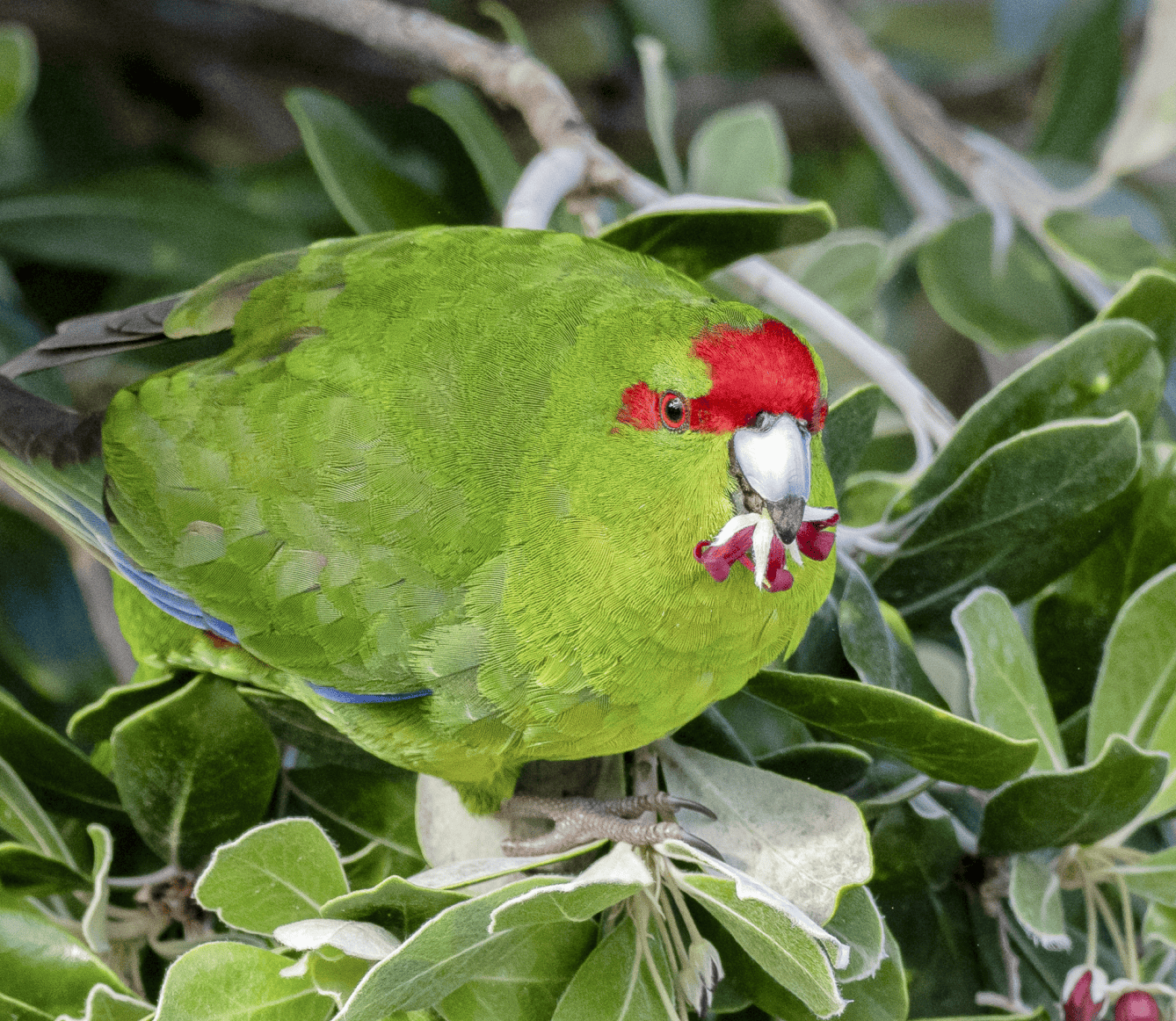
Karo - a frontline species for coastal protectionAuthor: Natalie Spyksma (from Dawn Chorus 140, Summer, February 2025)Photo credit: Jonthan MowerA plant that had an outstanding flowering season on Tiritiri Matangi Island during the spring of 2024 was Pittosporum crassifolium, better known by its Māori name, karo. As this issue of Dawn Chorus goes to print, the results of this flowering are obvious: big grey seed pods (capsules) are hanging in abundance on karo branches all over the Island.
The pods are attractive. They bob in the wind in tandem with the plant’s leaves, which flicker between the green upper and grey undersides, creating patterns and hues in constant change. Have you noticed their profusion this year?
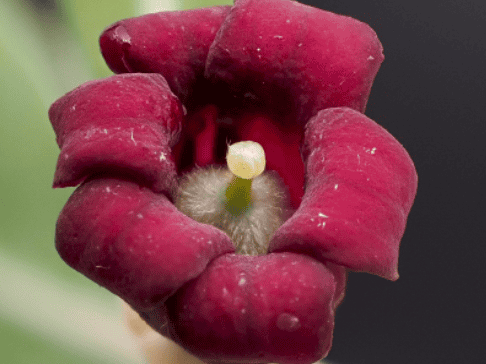 Left: A female flower with one prominent central pistil.Right: A male…

The tīeke/saddleback scheme and what it can teach us
Celebrating 40 years of tīeke/saddleback on Tiritiri MatangiAuthor: Kay Milton and John Stewart, Biodiversity Sub-CommitteeDate: May 2024, Dawn Chorus 137Header image credit: John SibleyWhen tīeke/saddleback arrived on Tiritiri Matangi in 1984, it was truly the beginning of an era. Not only did they bring new sights and sounds to enrich the experience of anyone visiting the Island, they also marked the beginning of a project that would consume many working hours over the subsequent 40 years and which continues to this day. In 1984, only a small fraction of the original bush cover remained, and the planting programme was only just getting underway. This meant there were very few sites where tīeke could nest, so boxes were provided for this purpose. There were 360 boxes, but regularly monitoring this number proved difficult, and, as the bush planted between 1984 and 1994 has matured, an increasing number of ‘natural’ sites has become available. Between 2008 and 2012, the number of boxes was reduced to a level that could be more easily managed by a team of volunteers. Since then, it has been relatively stable at around 150-160 boxes. Barbara was tasked with the responsibility of checking the boxes once a week during the season, and twice a week when eggs were hatching. This was quite a laborious task, which required a great deal of dedication, attention to…

Celebrating 40 years of tīeke/saddleback
Celebrating 40 years of tīeke/saddleback on Tiritiri MatangiAuthor: Stacey Balich, GuideDate: May 2024, Dawn Chorus 137Header image credit: John SibleyIn 1984, 24 tīeke/saddleback from Cuvier Island were released on Tiritiri Matangi. They quickly established themselves with the help of nest boxes, roost boxes and regenerating bush. This year marks the 40th anniversary of their arrival, and, to celebrate this, Barbara Walter shared with me her experiences and stories from the early years. Dr Tim Lovegrove (Auckland Regional Council Heritage Department scientist) coordinated the translocation from Cuvier Island. The 24 tīeke, comprising six breeding pairs and 12 juveniles, came from five different areas of Cuvier Island and had distinct dialects. In order to preserve these distinctions, they were released in five different areas on Tiritiri Matangi: Bush 1, Bush 2, Wattle Valley, Bush 21, and Bush 22 (see Figure 1). At the start, 360 nest boxes were made by the North Shore Forest and Bird branch, coordinated by Eric Geddes, who used to travel to the Island on a small runabout from Army Bay. There were some differences in how the boxes were made. Some were short and some were long, both types having a V shape for the opening. Later a grill was added to the opening to prevent mynas and ruru from getting in, especially ruru, as they were getting in and…

Soil: what helps create and maintain it
Soil: what helps create and maintain itAuthor: Libby May, GuideDate: September 2024Healthy soil is fundamental to our continued healthy life. It provides plants, filters and manages the volume of rainwater, hosts an enormous biodiversity both above and below ground and it can tell us about our past as well as protect our future. It’s a huge carbon pool, absorbing carbon dioxide from the air – 1,500 billion tonnes of carbon globally – almost three times more carbon than in all above ground biomass including trees, shrubs and grasses. According to the Land Care Research Soils portal, each year unsustainable land management around the globe is responsible for around 24 billion tonnes of fertile soil being contaminated, washed off the land or blown away by the wind. In New Zealand it’s 192 million tonnes a year. (1) It’s not a speedy process, creating healthy, rich, fertile soil. Its origins start with bare rock and sediment surfaces being weathered and disintegrating under the influence of climate. Over time the surface becomes available to vegetation, lead by lichens (of which we have an abundance on Tiritiri Matangi) which will root in any cracks they can find such as the greywacke we see on the Wattle Track. A thin layer of vegetation will gradually build up and in the fulness of time start decomposition which in turn produces organic acids. These help…

Spring has definitely sprung!
Spring has definitely sprung!Author: Neil Davies, GuideDate: September 2024Photos credit: Neil DaviesSunday 1st Sept. On Sunday Mary-Ann and I were over on the island checking tracking tunnel cards as part of our on-going monitoring programme. Nothing untoward and just the usual critters showing up on the cards – footprints of birds, weta, wētā punga, skinks, tuatara and Duvachel gecko to name a few. However, it was impossible not to be taken by the level of bird song, even in the middle of the day, which indeed sounded like the ‘dawn chorus’. There were lots of encounters with kōkako, hihi, korimako, tūī, pōpokotea and tīeke as well as several tuatara spotted outside their burrows. I think they were celebrating the return of sunshine and mild temperatures after the heavy rain, thunder and lightning from the weather ‘bomb’ that passed over on Saturday night. Things definitely seem to be warming up and Spring has definitely sprung! Kōwhai and karo are still blooming prodigiously all over the island and the ground is now being carpeted with yellow flower petals and the deep crimson colour of the karo flowers. It also looks like it’s going to be an exceptional year for harakeke (flax) with a huge number of flower spikes and the first flowers already opening (I haven’t seen any on the mainland yet). Rewarewa has started to flower too which also seems…
Pōpokatea
PōpokateaDespite their size, these birds have a good set of lungs on them and can be found in noisy flocks flitting through the canopy. In the North Island the pōpokatea/ whitehead is the main host to the koekoeā/long-tailed cuckoo who lays its eggs in their nest. Once hatched, the young koekoeā then evicts the host’s eggs and chicks and is raised alone. The pōpokatea continues to feed the koekoeā as if it was their own, even though it is much larger than themselves! Find Out More
Miromiro
MiromiroOver a dozen birds have been translocated onto Tiri – though only one has decided to hightail it back home – the miromiro or tomtit. After their translocation to the island in 2004, it appeared that they had disappeared. Soon afterwards, these midget birds were found to have winged it all the way to the Hunua ranges – 60 kilometres away. Things have changed now though, and there are regular sightings of a resident miromiro or two. Find Out More
Mātātā
Mātātā (Fernbird)More like a mouse than a bird, visitors are more likely to hear the ‘call and response’ tick/tack between pairs than see a mātātā/fernbird. These small sparrow-like birds are fitted with a long tail measuring half their size which means they typically only fly short distances. The Tiritiri population were originally rescued from the path of the Northern Motorway. Using recordings of their call, conservationists managed to lure a small population from this threatened piece of land and helicoptered them to their new island home. Those 13 birds have now formed a robust population. Find Out More
Kōtare
KōtareAs you walk from the wharf towards Hobb’s beach you may notice the banks are dotted with holes. Look closer and you’ll find you’re looking at a kōtare/kingfisher housing estate. To create these burrows, kōtare repeatedly fly headlong into the bank piercing the mud with their dagger-like bill! Once a purchase point has been created they will continue to dig with their beak forming an upward-sloping tunnel, and then a chamber in which they will nest. Although the name kingfisher suggests a diet consisting mainly of fish, these birds will eat almost anything, including skinks, crabs, small birds and even mice. Find Out More